Monday, November 23, 2009

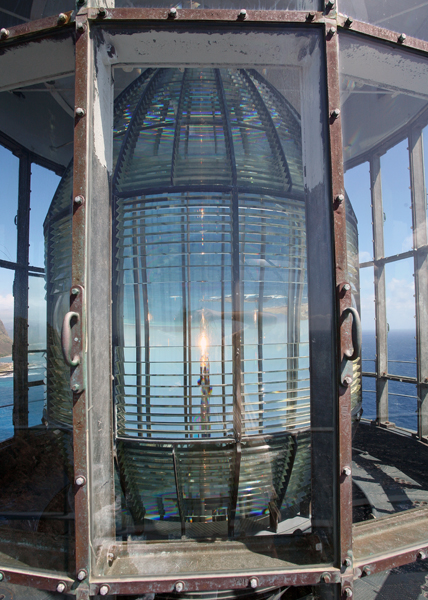
Umpqua River Lighthouse, OR


During the summer of 1849, the Coast Survey, headed by Alexander D. Bache, set out along the unmarked West Coast to determine the most beneficial locations for lighthouses. The Umpqua River mouth was selected as one of only six sites in the Oregon territory, which included the modern day states of Oregon and Washington.

Many thought the Umpqua River area would become a major shipping center due to its abundance of "green gold," the pristine timber rapidly being harvested. The turbulent force with which the river collided with the ocean created a great hazard for ships, and a beacon marking the spot was greatly needed. In 1888, $50,000 was appropriated for the construction of the second Umpqua River lighthouse. This time, with lesson learned, it was built further inland on a headland above the mouth of the river. The site is the furthest away from a river or ocean of all the lighthouses along the Oregon coast. Construction lasted from 1891 to 1894. The new lighthouse, a sibling to Heceta Head, is a 65-foot tower which stands 165 feet above sea level. The tower, brick overlaid with cement plaster, is five feet thick at the base and tapers to 21 inches thick at the parapet.

Today the Fresnel light is still shining. The lighthouse is part of the Umpqua River State Park and is managed by Douglas County Parks, who host a museum in a nearby historic Coast Guard building and conduct tours of the tower during the summer months. In 2007, Senator Gordon Smith introduced a provision as part of the Coast Guard Authorization Act for Fiscal Year 2008 that would facilitate alternative housing arrangements for Coast Guard personnel allowing the area surrounding the Umpqua River Lighthouse to be converted into a county park.

The following was submitted by Ryan J. Cunningham:

UMPQUA RIVER LIGHTHOUSE
It was the beginning of a prosperous time,
On the Umpqua River in 1849.
Long ago in days of old,
The timber industry began, known as “Green Gold.”
A lighthouse was needed to light the way,
Along the river, into the bay.
In the year of 1856, construction began.
But it was being built on the Indians hunting land.
So they stole the workers tools each day,
Causing their progress to be delayed.
A blast of dynamite scared the Indians away,
And soon all the tools were found.
Finally finishing the Cape Cod style duplex,
a task which proved to be complex.
The Lighthouse Keeper’s family moved into the place,
And the Keeper climbed the spiral staircase.
With its brilliant, red glow shining bright,
Leading ships out of the darkness, into the light.

Sunday, November 1, 2009

Cape Byron Lighthouse, Byron Bay, Australia


Standing on a bald rocky headland with a precipitious cliff on the east side, and a sheer drop of approximately 100 metres, Cape Byron Lighthouse is the most easterly light in Australia, and one of the most powerful. The tower is constructed from concrete blocks made on the ground, lifted and cemented into position and finally cement rendered inside and out. This technique saved erecting framework. The eight ton optical lens was made by the French company, Societe des Establishment, Henry Lepante, Paris.

It is a dioptric first-order bivalve double flashing lens and contains 760 pieces of highly polished prismatic glass. The lens revolves on a bath of 7cwt mercury. The original illuminant was a concentric six-wick kerosene burner. This was replaced in 1922 by a vaporised kerosene mantle burner, which increased the intensity from 145,000 cp to 500,000 cp. In 1956, the light was converted to mains electricity increasing the intensity to 2,200,000 cd. The original lens weight driven mechanism, which works on a similar principle as that of a grandfather clock, was also replaced with an electric drive motor when the light was converted to electric operation. An auxiliary fixed red light is exhibited from the tower to cover Julian Rocks to the north.


The Event

The installation of the lighthouse was regarded as a great event in the district of Byron Bay. A banquet was arranged and special trains carried visitors from Lismore and Murwillumbah for the opening. The Premier of the day, the Hon. John See (later Sir John See), was accompanied by a number of his colleagues who left Sydney in the Government steamer 'Victoria'. However, bad weather prevented the vessel from arriving on time, and when the party should have been banqueting the steamer was some thirty miles away. She arrived in the bay just before midnight on 30 November 1901, but again, the weather made it impossible for the party to land until dawn.


The Lighthouse Opened

After landing, the party was informed that the banquet had taken place on the previous evening, and the necessary toast had been heartily drunk in the absence of the Premier and his party. Mr See, after making an acrobatic performance in landing, was cordially cheered, and later formally welcomed at the Great Northern Hotel. Interestingly, the lighthouse was christened with a rich and sumptuous vintage burgundy - not dashed against the tower to waste, but sipped by the ladies and legislators to compensate for having missed all the good things of the banquet held the night before.


Visit Cape Byron Headland Reserve page for more information.

Saturday, October 24, 2009

Lighthouse Vandalism

Such disturbing news that lighthouses in various of locations are being vandalized. How sad is this? More so, who would do such a thing?
And what can we do about it?

Some are covered with graffiti of swear words and vulgarity. That alone is terrible.

But to place names of the conspiritor, that's just plain stupidity. Did they want everyone to know who did it? What could anyone get out of this? One could never know. Lighthouses of guidance for the open shores and beauty for the lovers of light and enthusiasts, look on with wonder and amazement and hopes that somehow we all can help stop this uncivilized manner.

I am sure the Lights are being renovated and cleaned up. At least I hope. If I could do anything in my power to help and prevent from something like this to happen again, I know I would without a second thought. Should the Coastguard be more alert? Should any other organization be for that matter?

There is a Preservation Act. There are other organizations and groups. There are local authorities. And there are admired individuals like We, who look up to these amazing Lights and love them.


From Lighthouse News:

Lighthouse Vandalism: Ongoing Problem In NSW Australia
More Vandalism At Tacking Point
Police Arrest Lighthouse Vandals
Port Elizabeth Lighthouse Broken Into
Lighthouse Keeper’s Home On The Market
Hope For Vandalized Crookhaven Lighthouse
Mexican Lighthouse Vandalism Thwarted
Theft at Toledo Harbor Lighthouse
Holland Harbor Lighthouse Vandalized

Sunday, October 11, 2009

Wisdom Guides

Rock of Salvation
Thomas Kinkade Portraits


Love is the one treasure that multiplies by division.
You can give it away, throw it away,
empty your pockets, shake the basket,
turn the glass upside down,
and tomorrow you will have more than ever.

Monday, September 14, 2009

Shades of Light

The Lighthouse Keeper Wonders
Edgar Guest


The light I have tended for 40 years
is now to be run by a set of gears.
The Keeper said, And it isn’t nice
to be put ashore by a mere device.

Now, fair or foul the wind that blow
or smooth or rough the sea below,
It is all the same. The ships at night
will run to an automatic light.

The clock and gear which truly turn

are timed and set so the light shall burn.
But did ever an automatic thing
set plants about in early Spring?

And did ever a bit of wire and gear
a cry for help in darkness hear?
Or welcome callers and show them through
the lighthouse rooms as I used to do?

‘Tis not in malice these things I say
All men must bow to the newer way.
But it’s strange for a lighthouse man like me

after forty years on shore to be.

And I wonder now - will the grass stay green?
Will the brass stay bright and the windows clean?
And will ever that automatic thing
plant marigolds in early Spring?

Monday, September 7, 2009

Shades of Light


Lightships


From 1898 to 1971, lightships were important elements in the system of navigation aids along Washington’s coast. On May 22, 1898, Light Vessel No. 67 became the first on Washington’s coast. She arrived at Umatilla Reef, 11 miles south of Cape Flattery. In 1909, Light Vessel No. 93 became Washington’s second lightship by taking station on Swiftsure Bank, 14 miles northwest of Cape Flattery. Thus, Washington had two of the Pacific Coast’s five lightships. Today lightships survive only as museum exhibits.


From Cape Mendecino to Cape Flattery


Maritime traffic bound for or departing Washington’s Columbia River ports also made use of Oregon’s only lightship, which was stationed off the Columbia River Bar. This made the Columbia Bar in one sense a "Washington" station because Columbia Bar lightships frequently served as relief vessels at Umatilla Reef and Swiftsure Bank.


The United States Lighthouse Service, which operated the lightships, placed the remaining two Pacific Coast light vessels at the San Francisco Bar and at Blunt’s Reef north of San Francisco. The lightships in California, Oregon, and Washington complemented the service’s lighthouses on the Pacific Coast. In Washington, these were at Cape Disappointment, North Head, Willapa Bay, Grays Harbor, Destruction Island, and Cape Flattery. They completed a chain of coastal beacons that stretched from California’s Cape Mendocino to Washington’s Cape Flattery. The arcs of the principal lights overlapped except for three short intervals.


Origin and Purpose of Lightships


The first world’s lightship went into operation in 1732 at the Nore, a sandbank in the estuary of England’s Thames River. Thereafter, in locations needing navigation aids but where lighthouse construction proved impossible or exorbitantly expensive, authorities, often reluctantly, substituted lightships. Officials responsible for navigation aids soon learned to prefer lighthouses to the floating beacons. Lightships, they learned, cost more to operate and maintain, and storms could drive them off station.


Lightship locations were usually approaches to ports or bays, or the outer limits of off-lying dangers such as reefs. In addition to their adaptability to localities inappropriate for lighthouses, lightships had the advantage of providing light and fog signals for which vessels could steer directly without fear of running aground. Early United States Coast Pilots even encouraged ships to run close aboard lightships. But following this advice had its hazards. In United States waters, ships have rammed lightships more than 100 times. In five instances, the lightships sank.


The first lightship in American waters began operation on Chesapeake Bay in 1820. Between 1820 and 1983, when the Coast Guard decommissioned the last American lightship, 179 of the vessels entered American service. At the peak of the lightship era in 1909, 56 lightships were in United States service.


Characteristics and Capabilities


American experience with lightships by the end of the nineteenth century led to a uniform design. Standard features included a length of about 135 feet, flat bottoms, rounded bows, bilge keels intended to reduce rolling, mushroom anchors weighing up to 7,800 pounds, and decks designed to allow water runoff. Lantern galleries with primary and standby lights on double masts permitted the ships’ beacons to be constantly illuminated. Radios became standard equipment for offshore lightships after 1901.


In 1912 the Light House Service assigned to its lightships visual call signs based on the International Code of Signals. These call signals, displayed through signal flags, added to the ways in which mariners could identify particular lightships. Until the 1920s, daymarks or distinctive round hoops mounted to one or both mastheads further identified each lightship.


Radios permitted not only ship-to-shore and ship-to-ship communication. They also enabled lightships to ask immediately for help for themselves or other craft, transmit critical weather bulletins, and report if blown off station. The U.S. Navy first assigned two-letter radio call signs for lightships. Three- and four-letter call signs developed by the U.S. Bureau of Standards soon replaced them. After 1921, lightships began to broadcast radio beacons that mariners could use to plot their location relative to the lightship.


When the Coast Guard took over the duties of the Light House Service in 1939-1940, it assigned new visual and radio call signs to lightships. The same radio call and flag hoist identified each lightship station with a separate call sign and hoist used by light vessels when they were off station. No. 113’s radio and visual call sign from 1940 to 1968 at Swiftsure Bank was, for example, NMJA. Submarine bells went into regular use in 1906. Suspended beneath some light vessel to a depth of 25 to 35 feet and operated by compressed air, the bells exhibited distinctive tones audible to distances of 10 miles or more to ships equipped with appropriate listening devices. In 1891, the U.S. Light House Service introduced its first self-propelled lightships. Prior to 1923, steam engines were universal. After 1923, diesel and diesel-electric power gradually replaced steam plants.


Lightships usually had straw-colored or red hulls. Either side of the hull bore the station’s name painted in large letters. After 1940, the U.S. Coast Guard standardized its lightships’ paint schemes. Red hulls featured six-and-one-half-foot white letters announcing the light station’s name. White paint distinguished deckhouses and boats, and mast and trim were buff. The ships became known by the names of their stations.


On November 28, 1899, gale force winds broke the heavy chains linking No. 50 to her anchors and drove the helpless ship onto Cape Disappointment on the Washington side of the Columbia River entrance. Six months’ effort at hauling her off the beach came to naught. In June 1900, three contractors suggested moving No. 50 overland to Baker’s Bay. This cove on the north shore of the Columbia, just inside the river entrance, lay about 700 yards from the grounding site. After laying No. 50 up at Astoria in 1909, the Light House Service had her surveyed and condemned in 1915. The service then sold her at public auction for $1,667.99 on April 27, 1915. Subsequent owners used her as a freighter in Alaskan waters under the name of San Cosmo and Margaret until 1935.


Umatilla Reef Station


Umatilla Reef Lightship Station was located offshore from the small Indian village of Ozette, 11 miles south of Cape Flattery. About four miles seaward from Cape Alva, and 2.5 miles south of Umatilla Reef, the station aided mariners transiting the coast or making landfall after transoceanic voyages. In Washington, No. 83 (later WLV 508) found a final resting place as a museum ship at Seattle’s Northwest Seaport. She had spent time at all five Pacific Coast light stations between 1905 and 1960, when she concluded her career as a relief ship for the Thirteenth Coast Guard District in Seattle.


The end of the lightship era in America began when a 1957 study estimated the annual cost of a lightship station at $1.32 million and determined that each station required 1.32 vessels. Seeking to cut costs, the U.S. Coast Guard began to replace the lightships with either offshore light structures similar to oil platforms or the new Large Navigation Buoys (LNBs). The steel 60-ton LNBs with 35-foot tower masts topped with 35-foot radio beacon antenna replaced deepwater lightship stations. Radio circuits provided remote control of navigation aids on the buoys. These included lights, sound signals, and radio beacons.


Sources:


Sunday, August 30, 2009

In Memory of Senator Ted Kennedy

Edward M. Kennedy
1932 ~ 2009


As most of the world knows, we’ve lost long-time Massachusetts Senator Ted Kennedy to brain cancer. What few might know is that he was a lighthouse enthusiast. It was largely through his efforts that the Boston Harbor Lighthouse on Little Brewster Island is forever manned, even though the lighthouse itself is automated. It is now kept by a woman, who takes care of the site along with other duties. In the very moving remarks by his son, Ted Kennedy Jr., these words were spoke:


He believed that in order to know
what to do in the future,
you had to understand the past.
My father loved other old things.
He loved his classic wooden schooner,
the Mya, He loved lighthouses
and his 1973 Pontiac convertible.


Irregardless if you were a Democrat, Republican or Independent, the United States has lost a great and humble man who worked for all. Despite the tragedies of his past, or maybe because of them, he rose above most men and worked for and was a friend to all. May you rest in eternal peace.


Copyright © 2009 Lighthouse News

Wednesday, August 26, 2009

Point Iroquois Light, MI


For large vessels to be able to sail directly from Lake Superior to the lower lakes, it was evident that the increase in maritime commerce would be both dramatic and immediate. While the lighthouse at Whitefish Point served well to guide vessels around the Point after which it was named, the location of the entrance to the St. Mary's River remained unmarked, and it was evident that a light was needed to help funnel vessels into the river mouth at the southeast end of Whitefish Bay. Iroquois Point had received its name in 1662 after the local Ojibwa encountered a band of intruding Iroquois encamped on the Point. The following morning both groups were in a full-pitched battle, and by the end of the day, the entire band of Iroquois had been wiped-out and the Point named for eternity.


Plans and construction began for the Point Iroquois Lighthouse in 1855, consisting of a 45 foot tall rubble stone tower with a wooden lantern deck, the tower was outfitted with a flashing white Fourth Order Fresnel lens. As a result of its location on the highest ground on the Point, the Light had a 63-foot focal plane, and a range of visibility of 10 nautical miles in clear weather. In the fall of 1870, a prefabricated cast iron spiral stairway with 72 steps wound within the tower, supported by a hollow central iron column. Capped with a decagonal cast iron lantern housing the Fourth Order Fresnel from the original tower, exhibiting the station's characteristic white flash every 30 seconds. The tower's location atop high ground on the Point provided the lens with a focal plane of 72 feet, and a resulting 15 mile visible range during clear weather.


With improvements in RADAR, radio navigation and LORAN-C in the late 1950's many of the nation's lights quickly became obsolete. After Point Iroquois Lighted Buoy 44 was installed offshore in 1962, the Point Iroquois Light was discontinued. In an event to reduce operating costs, the Coast Guard transferred ownership of the station to the U. S. Park Service in 1965, with the property incorporated into the Hiawatha National Forest. No longer serving any purpose, the station's Fourth Order Fresnel was removed from the lantern later that year after more than a century of faithful service to lake Superior mariners. The lens was carefully disassembled and crated-up, and shipped to Washington DC, where it was placed on display at the Smithsonian Institution. The station buildings were thereafter leased to the Bay Mills-Brimley Historical Research Society, which completed a total restoration of the building in 1983.


Much of the station has been converted into an excellent maritime museum, and is open to visitors from Memorial Day through October 15, and is well worth visiting.


The museum and tower are open to the public every day from Memorial Day through October 15. Hours are 10.00am to 5.00pm, seven days a week. On Friday, Saturday and Sunday, they reopen from 7.00pm to 9.00pm.


Contact information:


Point Iroquois Lighthouse & Maritime Museum
Sault Ste. Marie Ranger Office
4000 I-75 Business Spur Sault Ste.
Marie, MI 49783
906-635-5311 or 906-437-5272

Montauk Point Light, NY


Montauk Point and its sturdy old tower are the sources of much history and the scene of many marine disasters. During the American Revolution, Eastern Long Island and Montauk Point were occupied by the British. The Royal Navy kept a huge fire burning on the bluff overlooking the sea to serve as a beacon for the ships of the squadron that blockaded Long Island Sound. Montauk Point was certainly one of the most dangerous areas on the new trans-Atlantic trade route. Records show that the rock-studded point projecting out into an often fog-ridden Atlantic Ocean took a heavy toll of shipping during the early years of settlement in the new world.


In 1792, to prevent this loss of ships and trade, Congress appropriated $255.12 to buy land upon which a lighthouse was to be built to warn passing mariners of the perilous rocks at Montauk Point. Three years later, President George Washington signed the authorization for the construction of the light. Also in his favor was the fact that he had already built a successful lighthouse at Cape Henry, Virginia in 1791. McComb was later commissioned to build also Old Field Point Light, Port Jefferson, New York in 1799.


Montauk Point Light, like the Statue of Liberty, symbolizes the United States emergence from a colonial enclave to an independent trading nation which opened its arms to the millions of Europeans who saw it as the promised land. Montauk Point Light had been the only beacon, casting a steady beam, on that lonely wind swept 76 mile stretch of coast between Fire Island Light and Montauk Point. Thousands of sightseers annually picnic at beautiful Montauk State Park and visit its historic adjacent beacon.


Montauk Point Lighthouse is one of the few remaining 18th century American Lighthouses still standing. It is also one of the best known American lighthouses. Standing a majestic 169 feet above the pounding Atlantic Ocean, it continues to serve seafarers as faithfully as it has for nearly two centuries.


Montauk Light inspired Walt Whitman to write six lines subtitled "From Montauk Point" in 1888 as part of his most famous poem Leaves of Grass.


I stand as on some mighty eagle's beak,

Eastward the sea absorbing,

viewing (nothing but sea and sky),

The tossing waves,

the foam,

the ships in the distance,

The wild unrest, the snowy.

curling caps-that inbound urge and urge of waves,

the shores forever . . . .


~ ~ ~ ~ ~ ~ ~ ~ ~ ~ ~ ~ ~


For anyone interested in Long Island Lighthouses...


631-668-2544

Outside of the area: 1-888-MTK-POINT

Seven Foot Knoll Light, MD


Seven Foot Knoll Light was the second screwpile light to be built on the Chesapeake and the first to be built in Maryland. It is built entirely of iron and in a circular design, which is unique among the Bay's screwpiles along with its barn red color. It was constructed in 1855 at the mouth of the Patapsco River and had a fourth order Fresnel lens.


Ice flows threatened the lighthouse on several occasions but repairs were made as well as several shoring projects over the years. Thomas Steinhise, keeper, received a Congressional medal for heroism in 1933 after braving a storm in his small skiff to single-handedly rescue the crew of a foundering tugboat.


The lighthouse was automated in 1948 and soon fell victim to severe corrosion and vandalism. In October 1987 ownership of the lighthouse was transferred to the city of Baltimore. It was moved by barge, in 1988, to Pier 5 at Inner Harbor waterfront where it stands on its own legs.


It is the oldest surviving screwpile lighthouse and the only one of its design and is maintained by the
Living Classrooms Foundation as a museum and learning center for Baltimore schools. The Seaport of Baltimore has posted a history of the light station.


The lighthouse is open daily, along with the lightship Chesapeake, spring to fall and Friday to Sunday in winter (museum admission fee).